

On Leisure and Doing Nothing
In early capitalism, a working day of 10-14 hours, 6 days per week was the norm for the working class. Today, in most Western countries, those hours are limited to 8 hours per day with an average of 5 working days.
Still, most of us think we are working too much, and even a glance back to pre-industrial revolution work hours of roughly 1600 hours of labor per year are more appealing to most of us. Leftist influence pushes towards universal basic income (UBI), shorter workweeks, and the ability of the working class to take more leisure time. In countries like Iceland, 51% of workers in the country opted to move to a 4-day workweek – resulting in the country being one of the fastest growing economies in Europe.
Despite those initiatives showing clear economic value or lack of economic impact at worst, freeing the working class for a life of leisure, that opportunity for leisure is often met, not with a move to embrace free time but instead the worry that perhaps we won’t spend that free time well enough.
The value of how you spend your time
In a statement I first came across by Stefan Collini, author of Speaking of Universities, the author states that free time is a concept of the (academic) elite. People with health, wealth, and the energy to have hobbies, interests, and pursuits. Everyone else “just watches TV”. That quote, from somewhere around 2010, stuck with me.
It’s also not a new phenomenon. Thorstein Veblen discusses it in his 1899 book, “The Theory of the Leisure Class”, in which he explores how true leisure, art sports, science, and philanthropy, are all reserved for the elite. Very true in an age when the vast majority of the western world worked 10+ hours, 5-6 days per week.
By 2017, when Rutger Bregman wrote his “Utopia for Realists” he quotes “Wouldn’t everyone just watch TV all the time?” as the first response to telling people he was writing a book about leisure.
This response is one that is deeply worked into the Western culture of both dismissing the general populace and the working class as having agency for themselves and one in which we dismiss any type of leisure activity that doesn’t count as productivity.
That somehow results in a process by which we systematically dismiss the value of some types of media while elevating the moral qualities of other types of media.
For example, most of us are familiar with the biased viewpoint in which the reactions to saying that you’ve watched 800 hours of television in a year are vastly different to the reactions to saying you’ve read 100 books that year – despite both being about the same amount of time investment for most people. More tellingly, those reactions don’t wait to find out if you’ve watched 600 hours of documentary teaching you meaningful things about politics or the world or if your 100 books were MMM erotica. The value is not in the content but in the format of the media. Reading a book is somehow more worthwhile than watching something on Netflix.
That’s even remarkably self-acknowledged in some popular books.
“[] a lot of literary people [] see books primarily as a way of appearing cultured. [] It was culture as class performance, literature fetishized for its ability to take educated people on false emotional journeys so that they might afterwards feel superior to the uneducated people whose emotional journeys they liked to read about. Even if the writer himself was a good person and even if his book really was insightful, all books were ultimately marketed as status symbols and all writers participated to some degree in this marketing. “_ Sally Rooney, Normal People
The myth of the deserving poor
“To be able to fill leisure intelligently is the last product of civilization” _ Bertrand Russel
Ah yes, intelligently, there’s the rub. You see, perhaps the opposition to the poor having free time isn’t in our belief that perhaps the poor don’t know what to do with their free time. That they will waste it. Perhaps it’s not in the fear that, without the strong hand of Neoliberalism to guide, the wayward working class will founder into despair and television.
No, it’s in our societal biases against the working-class having intelligence at all. Most of us like to think that poverty, depression, illness are preventable. We like to think that those in despair are simply not doing enough to prevent the state that they are in.
“Keep in mind that time is money; he who could acquire ten shillings by his work and goes strolling half of the day, or he who lazes around in his room, cannot, even if he spends only six pence for this pleasure, calculate only this, he has, in addition, five shillings spent or better discarded.’’ _ Benjamin Franklin

That’s a convenient form of escapism that allows most of us to avoid thinking about just how close we are to actual poverty. One major illness could mean you’re on the street in much of the western world.
Those viewpoints are deeply engrained in western society. In The Protestant Ethic and the Spirit of Capitalism, Weber shares how the Protestant ethic shaped modern capitalism, including its views on leisure. Work and acquisition (of possessions, knowledge, achievements) were valued as moral and status symbols, and pure consumption or enjoyment without acquisition were devalued and even socially condemned. Hence, collecting curiosity cabinets is good for learning about nature and acquiring things of value, while daydreaming in a field is bad. One produces output and the other does not.
The ethic meant that individuals had to prove they were deserving. Most of us would recognize that exact phrase, “the deserving poor” in today’s approach to the welfare state, with many countries requiring the poor to prove that they are trying to find work rather than, say, rotting in bed and watching television.
This mindset also dates back to the founding fathers of Western thought tradition, where Plato and Aristotle argue that the mass of humanity is unable to govern themselves. Instead, they argued for an academic and political elite to be created with the wisdom to make good decisions for the rest of mankind.
It’s part of the convenient lie that the working class doesn’t do enough to raise themselves out of being poor, or, you know, just working class.

It’s also true that the working class watches a lot of TV. Most strikingly, that’s most prominent in the countries with the longest work hours. In the United States, that averages about 33 hours per week, or almost 9 years over a lifetime. That’s in a country where average worked hours for a full-time employee hover at just under 9 hours per day. Or, where it’s not uncommon for individuals to brag of working 60-70 hours per week.
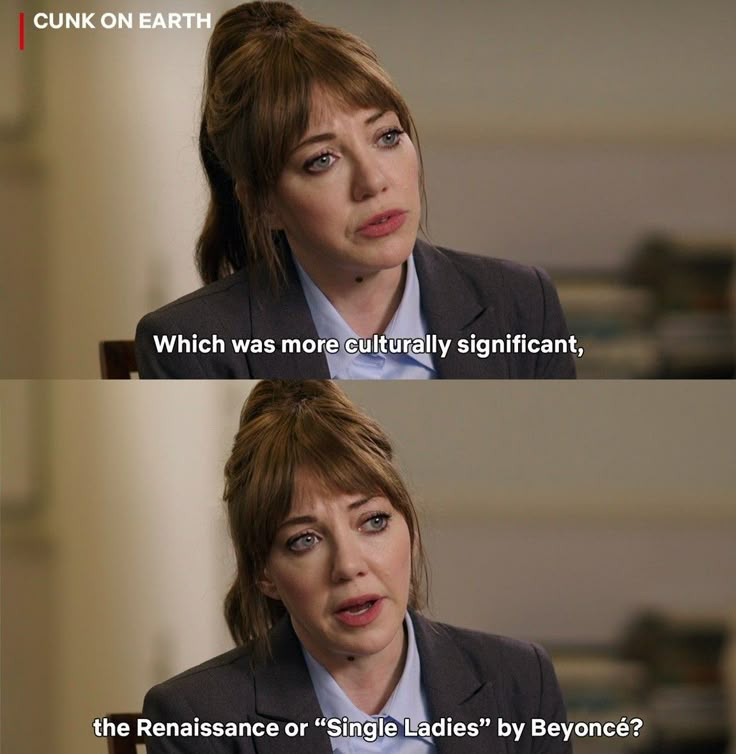
Here, of course, we equate television with doing nothing, with boredom, with vegetating. The argument is that free time equates to a lack of value, because people in societies with high earnings spend their time on unproductive activities.
They aren’t making rocket ships in their backyard or becoming the next Monet, they are simply watching television. Boring? Right?
Freedom to choose (nothing)
Part of that is, of course, about choice. Western society is increasingly fast paced, as consumers are pushed to consume more. To do more. Get off work and pay for a bouldering hall, buy a coffee and a croissant, go out dancing to stimulate the economy. If you’re doing nothing you’re not contributing, if you’re not contributing, you’re boring. And in our current stage of capitalism, everything, especially activities and experiences, are a commodity. For Marx, activities connected with money speed up, because money only fulfills its function through circulation – leading to a sense of pressure.
Choosing to step out of that pressure means choosing to do nothing.
More importantly, retaining that freedom of choice is critical to feeling that leisure is leisure. People prefer to make choices even when their choices impair other parts of their lives, even when choosing to do nothing means choosing to escape from reality.
Leisure also requires resources. Those resources can be difficult to access in developing countries, where resources might simply not exist. But working time, energy, and headspace all come into play as well. Especially in western societies where rises in cost of living have led to phenomena where in 2022, 16% of the working population of the UK took on an additional job – that headspace is increasingly limited.
In Down and Out in Paris and London (1933) George Orwell famously sets aside his middle-class upbringing to live in poverty for a year in Paris.
“You thought it would be quite simple; it’s extraordinarily complicated. You thought it would be terrible; it’s merely squalid and boring”. Orwell spends days lying in bed because there was nothing worth getting up for. “The crux of poverty,” he says “is it annihilates the future. All that remains is surviving the here and now”.
Going back further, to 1651, you can find a similar message in Thomas Hobbe’s Leviathan. Leviathan argues for centralized and strong government, the social contract in which the individual gives up his rights to the government so that the government becomes “the summation of all individual rights”, thereby giving the government the power to infringe on one person’s rights when that person is infringing on the rights of others. The first half of that book tackles the concept that you cannot expect a person whose primary concerns are whether they eat tomorrow to have the ability to concern themselves with morality and right. Or leisure.
Hobbes argued that it was the government’s responsibility to give the populate the education and resources to make good political and moral decisions. Many of us today could also stretch that to making good choices with leisure time.
In The Tyranny of Merit, Michael Sandel pitches this as a world gone mad. The public no longer functions as a quality filter because people spend their money in a way that reflects what they want.
That makes sense, when you consider that people are tired. Re Hobbes, “the man who is caught up in ensuring he has the means for sustenance does not also have the means for subjectivity”. People want leisure to be easy, a time to tune out and shut down.
Without first freeing mankind to have leisure, you cannot expect mankind to have the time, motivation, or resources to make meaningful choices with his leisure.
As George Monbiot suggests in his 2018 classic, “Out of the Wreckage”, concepts of having citizens participate in forums and in votes do not work because citizens don’t have the time or energy to engage meaningfully in topics and quickly become overwhelmed.
He suggests that even in fully citizen-driven quorums, topic selection should be run by professional politicians who have that space – creating a best-of-both worlds approach. The working class do not have the leisure to engage in meaningful research, so they should not be expected to. While that hails closer to the sun of Plato and the working class are not able to govern themselves than most of us are comfortable with, the point rings sound. People can’t invest more than they have.
Should we be spending leisure more wisely?
Maybe the advent of more leisure, whether through better controls on working hours, automation of work, or the integration of a universal basic income and universal basic necessities would result in the working class having the freedom to learn better ways to spend our time. Perhaps two years after the initiation of a UBI, most of us would have hobbies like squash, chess in the park, musical instruments, and painting.
Still, something about that hope strikes of a capitalist work ethic and the incessant drive to produce. To learn, to be better, to “improve”. To give up leisure time in exchange for producing something, whether that be hobby bird houses or a version of you that is better equipped to go back to work on Monday.

In his book The Harried Leisure Class, economist Staffan Linder proposed that people with time are increasingly pressured to spend that time more meaningfully, to “fulfil as many needs and wishes as possible”, creating a sense of stress rather than leisure.
“If you don’t spend your free time like this, it doesn’t mean you have no chance of being successful. However, picking up some of these strategies can improve your abilities, improve your mindset, and expand your network to levels that will increase your chances for success in the workplace.” (Link)
“Work was for the poor, the more someone worked, the poorer they were. Nowadays, excessive work and pressure are status symbols. Moaning about too much work is often just a veiled attempt to come across as important and interesting. Time to oneself is sooner equated with unemployment and laziness, certainly in countries where the wealth gap has widened.” _ Rutger Bregman, Utopia for Realists
There’s also a growing resistance to this trend that leisure must involve producing, improvement, and constant learning. Take bimboism, where women (and more often men) are purposely choosing to abandon “educated” pursuits, learning, and doing something with their free time that isn’t true leisure.
A sense of freedom, more than anything else, defines leisure as leisure. That means freedom to choose. Otherwise, free time becomes a work activity, reading books becomes work when you are obligated to read them, learning becomes work when you feel responsible for doing so. When we lose our sense of choice and freedom, we lose our sense of leisure, instead returning to the incessant grind of a 14+ hour workday, in which a nuclear family must work, clean the home, cook a meal, and play educational games with children before sports and moving on to their own (educational) pursuits. Exhausting.
The origins of leisure as a concept are freedom from duties, obligations, and necessities. A separation from the act of survival. Something which you can perform for its own sake, such as for the inherent pleasure of doing it.
Perhaps movements towards more free time would, after all, give us more freedom to choose activities that we see as adding value.
Perhaps, in the meantime, we could learn to value leisure, true leisure, and the art of doing nothing. Lie in the grass in the sun for an afternoon. Watch Tv, watch porn, vegetate a bit. Maybe it’s good for you. Perhaps we could learn to value entertainment for the sake of entertainment. Is there anything wrong with spending 800 hours watching television? Or have we simply absorbed the protestant work ethos into our bones and think that perhaps that time could be better spent doing something.
The alienation of leisure is more profound: it does not relate to the direct subordination to working time but is linked to the very impossibility of wasting one’s time. _ Jean Baudrillard – The Consumer Society