
A few years ago, I was reading a book (highly unusual of course) and I lost whatever bit of paper I was using as a bookmark. Before you lambast me for littering, which I surely did, because I was on a train, there’s a story there. Because I looked at my page number and closed my book. And later, I opened my book and started reading it again in front of a friend who was subsequently impressed that I didn’t need a page mark.
I was curious, did I need a page mark? I’d had no issues actually remembering the page number then, but what about over a workday? Over a couple of days? Over a weekend? I ran an experiment; I didn’t use a page mark of any kind for about 3 months. I quickly noticed two things. The first was that I can’t remember my location in books for more than about 4 books at a time. The second is that, if I am using a page mark, I can’t remember the page number. Okay, interesting, why was that?
I checked it a few more times and indeed. If I know I’ve recorded my place in a book, I simply don’t store the page number anymore. Fascinating.
Flash forward to a few weeks ago, someone shared this video from a developer talking about “vibe coding”. In it, he expressed not just what we’re all thinking, using a heuristic backed by a few handfuls of transformers and a prioritization metric to do your work for you takes away the passion, the investment, the fun. Preaching to the choir, who would disagree? (shhhh, I know) But he also talked about another phenomenon. The fact that he was struggling to get back to coding himself despite actively struggling with appreciating his output with AI. I’m serving hotdogs, and I can’t stop.
Originally, he put me on the wrong track. He talked about how it was just *so easy* to use AI, why would he do it by hand. And that’s just the phenomenon of effort avoidance right? You learn there’s an easier way so you do it – like when people get used to ordering takeout, the shift back to cooking dinner can be phenomenally difficult. But that shift back to cooking is more than just laziness it’s also a phenomenon where people lose the habits that led to cooking. In a way they’ve outsourced the task, the skill, to someone else and decided they don’t need it anymore (all under the hood of course).
And that’s the thing that I’m interested in. Distributed cognition, a bit of a pet concept of mine for years, so it’s curious it took me so long to make the link.
People, humans, actually living things in general tend to outsource tasks that would normally be completed in the body to external sources whenever they can. Things that are alive, plants, insects, animals, you name it, inherently look to other things to support their function. Sometimes we call it tool usage. Sometimes it’s more complicated than that. An ape like me outsources working memory to a pen and paper, I can remember vast numbers of answers to questions if only I write them down – to the point where I could not function without writing things down. A corvid outsources reach for a stick, and a spider outsources reach and ability to feel to a web – all vastly different but all part of the same concept of extending the senses outside of the body. Sidenote: see me using em dashes as they are supposed to be used and not as some weird alternative to a comma.
Distributed cognition.
The thing is, distributing cognition has effects.
In school, most of us over a certain age had the rule that we weren’t allowed to use the calculator to do math, especially for exams. Everyone under a certain age might have had to use them as part of mandatory classroom testing. The one generation was punished for it and the next, punished for not.
The math wars were a series of discussions and public arguments about the increasing prevalence of technology in the classroom. Traditionalists feared that if students were allowed to use calculators, they wouldn’t learn to do the problems themselves. “you won’t walk around with a calculator in your pocket”.
Worse, there were fears that introducing calculators to students who already performed well in math(add an s if you’re British) would undermine already learned skills. Students would stagnate and they would lose their ability to do math. Calculators moved into the classroom anyway as a critical part of how modern humans perform math – but with a four-pronged approach of calculation, representation, affirmation, and experimentation. Students were not to simply plug math problems into the graph calculator and get results, they had to learn to use the calculator to think critically. Today, those approaches have paid off in students who are highly proficient with computer math, while sometimes being unable to perform long division on paper.
While there’s little in the way of active research looking at what happens when you hand a calculator to someone *already proficient in math* and they start relying on it exclusively, we have plenty of research on other similar topics.
Input methods and language
For example, the use of input methods to write Korean, Japanese, Mandarin, etc., on digital QWERTY keyboards. There are hundreds of input methods. Sogou Pinyin is an input method editor using pinyin, one of the most popular romanization systems for Standard Chinese. It has about 300 million users in mainland China, who use it to type Chinese characters on a western keyboard, no thousands of keys needed.
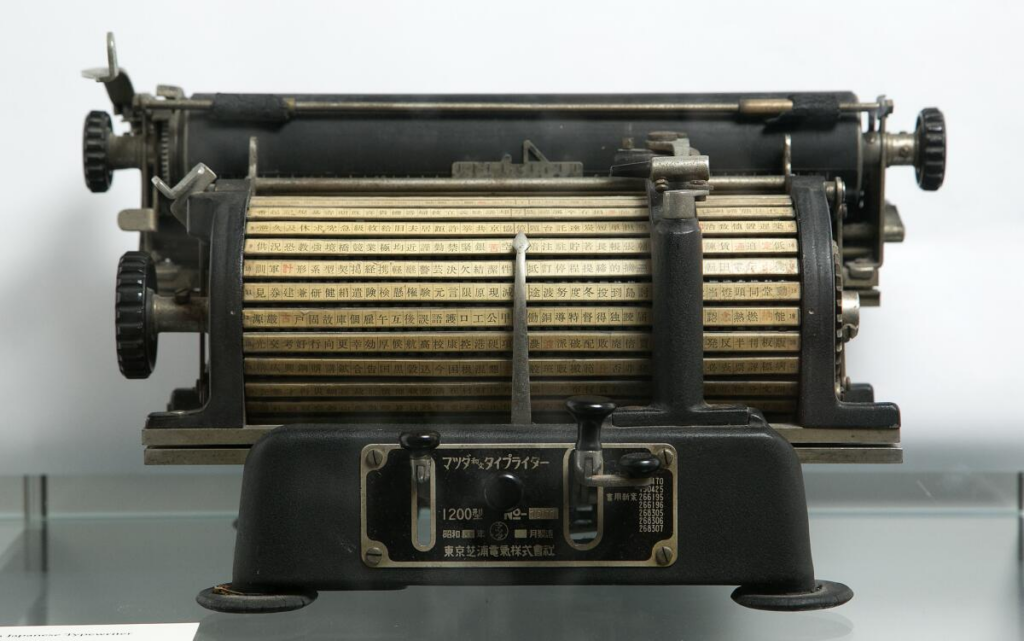
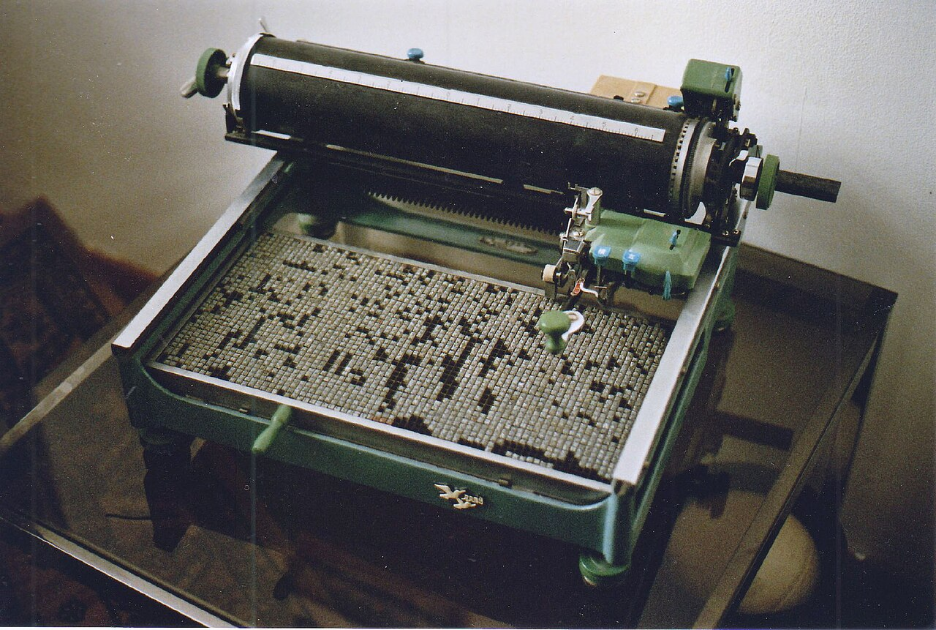
Nevermind that the various Chinese typewriters available to us are things of vast beauty and complexity, they’ve been superseded by the electronic romanization input methods (made all the better by UTF-8, which comes with diacritics important for a tonal language). Pinyin romanizes standard Chinese by spelling out the sound of the word.
Variations of Pinyin are now used in almost every aspect of formal language use, from government to education – and it’s sometimes even used on street signs.
According to Victor H. Mair, professor of Chinese at the University of Pennsylvania, parts of the education system also “became alarmed that word-based pinyin was becoming a de facto alternative to Chinese characters as a script for writing Mandarin”. This led to the fact that formal pinyin almost exclusively writes syllables separately. Sounds familiar right.
It also led to the phenomenon of “Character Amnesia”, “pick up pen, forget the character” in Chinese. Character Amnesia has been studied for decades. It’s basically the phenomenon where people know how to get to a Chinese character using pinyin, so they forget how to draw the character. After indexing the characters using a keyboard, the brain no longer has a reason to store the never-used handwritten version. As a result, in a spelling bee about 20 years ago, only 30% of participants were able to draw the character for toad. Look this one up, for reasons, I am not linking to Chinese websites.
Those problems, of course, date back to the 1980s. China and Japan have both worked to remedy the issue by introducing traditional calligraphy classes into high schools. Electronic devices more often feature drawing input methods in addition to Romanized input methods.
There are, of course, also parallels to what happens to handwriting such as cursive for western students as well.
Or, how the advent of the smartphone made remembering phone numbers beyond your own irrelevant. At 15 I could happily rattle off the phone number of every person important to me – now, I know only my own. (I have friends, promise)
Already in 2011, researchers were assessing the impacts of having information always available. When asked if people would stop remembering what information is and instead remember how to find it, the answer was a resounding yes. People who use Google or who are able to look information up – ranging from their social security number to their classmates names – were significantly less likely to remember that data for themselves.
Researcher Betsy Sparrow called it a form of “external transactive memory”, where information is stored collectively outside ourselves, and all we have to do is remember how to get to it.
Distributed cognition.
Again, that’s not unique to humans. Look at a spider, which uses a web and its vibration as an extension of the physical perception. An orb weaver crouched in the center of her web is tracking every vibration, every sound, and she knows the difference between a twig and a fly falling into her web – no matter how far on the other side of the web it is.

Despite the fact that the researchers here called it “the Google Effect” it’s a well-documented phenomenon that people have simply done for thousands of years. We distribute our cognition across tools, systems, and other people. And then we stop relying on our brains for that cognition. If I can add a smiley to WhatsApp with a menu, why would I remember an ASCII emoji? (except for the fact that it’s cuter and superior in every way)
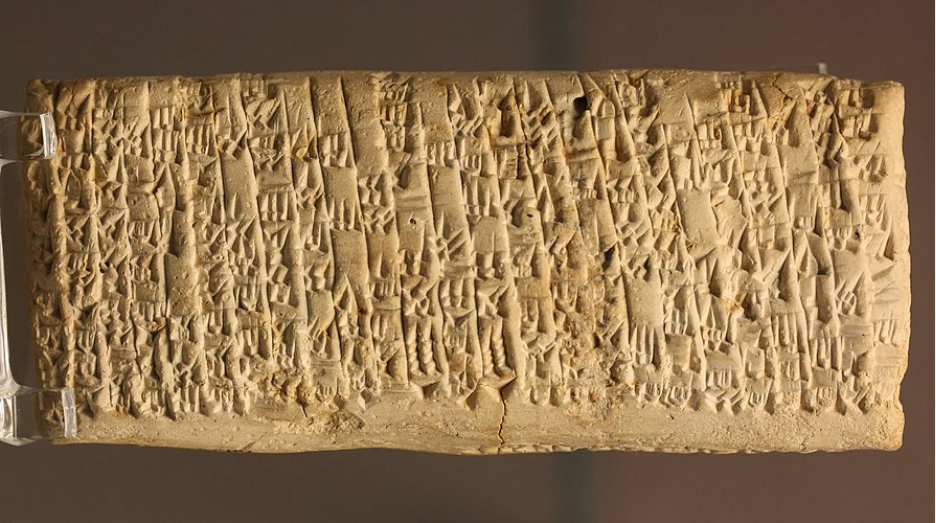
(a side quest about poor quality copper ingots)
We learn how to index and retrieve OR how to remember depending on our options. Both important skills. If you read my blog, I also never shut up about it with language, how people index word meaning into categories and then often retrieve only the broadest sense of the category for the meaning of a word. Apple? Ball? Well it’s round isn’t it. Or how my mother would typically rotate through every one of my siblings’ names before getting to mine. Category: offspring.
The thing is, when we start indexing things, outsourcing them, we forget them. For input users, it’s called character amnesia. Pick up pen, forget character. But nearly all of us have forgotten a pin code we had written down. Or started using a password manager and promptly forgotten the password we used to log into email every day of our lives.
So does it make sense that if you rely on an AI to write code/fiction/letters/anything for you, you’ll forget how to do it yourself? Yes! Because the way you index how to get to that information means you’ll remember the prompts – how to get there – and not the specific functions and classes or how to put them together. Use it or lose it.
Of course, like riding a bicycle, chances are, you can relatively easily get back to where you were, so forgetting all of your passwords doesn’t mean you won’t remember them ever again. It’s not the end of the line. Just something to think about.