
Setup–> Punchline
It’s the standard joke format we all know. Yet, hidden behind this seemingly simple process, is a wealth of insight into human social behavior and functioning, most importantly into how we use language. A good joke requires social skills, linguistic skills, and narrative storytelling.
Sherlock Holmes and Dr. Watson go camping. In the middle of the night, Holmes wakes Watson and asks what he sees. Watson says, “Millions of stars.” Holmes replies, “Watson, you idiot, somebody stole our tent!”
The Setup
What is a setup?
Well, it’s setting a scene. It’s inserting the audience into your story. It’s narrative storytelling. In order for your punchline to land, your audience needs to know where you’re at. Where you’re coming from. You’re creating a mental picture that you will then insert the punchline into or subvert as part of the punchline.
In language, that’s relies on pragmatics.
Pragmatics:
Pragmatics means a lot of things, but in short, context influences the interpretation of meaning.
A stranger stops and asks for directions. Seemingly unaware that the asker is not from around these parts, the pedestrian answers:
“Take a left turn at the old Dairy Queen and then take a right just before Miss William’s farm!”
Baffled, but unwilling to press further, the stranger carries on. Another passerby is more helpful.
“Take a left at Old Georgetown Road, and then take a right onto Service Road 27, it will take you right to the I20”
One of these answers takes pragmatics, the state of mind and shared knowledge between the two people communicating, into account. The other does not.
Pragmatics are knowing what another person has in their worldview. You’d want to know that the person you are talking to in Minnesota is also from San Francisco and not from New York before referring to San Francisco as The City. You need shared pragmatics.
What’s for dinner? Same as last week?
A setup is about establishing those pragmatics. Creating a shared worldview with your audience.
- Here’s the scene: “This one time at bandcamp”
- Relatable story: “I was vacuuming my house”
- Definitions: “So, we all know what an apple is, right?”
- Setting expectations: “Knock knock who’s there” https://www.youtube.com/watch?v=4DqoQq1zME8&vl=
- Commonly defined words: “Time flies like an arrow”
The basic concepts of linguistic pragmatics heavily underpin humor and what kinds of humor are possible. In fact, most humor involves creating shared context and then warping that expectation. You could call this locutionary corruption, where jokes create an expected pragmatic outcome, but then direct towards another result.
The linguistic theory of speech acts, first defined by J.L. Austin, shows how language is used not just to “say” things but to “do” things. “I do”, “Pass me the salt”, “Go to your room!”. Humor often heavily relies on speech acts. “I hereby announce you neighbor and neighbor”
Jokes also often break the rules of pragmatics, such as the sincerity condition. Here, in normal speech, one must operate under the belief that the speaker means what they say. A large part of humor is disrupting that expectation. E.g., much of irony and satire. Jokes rely on deception, including lying, and flaunting conventional norms such as speech acts.
Semantics
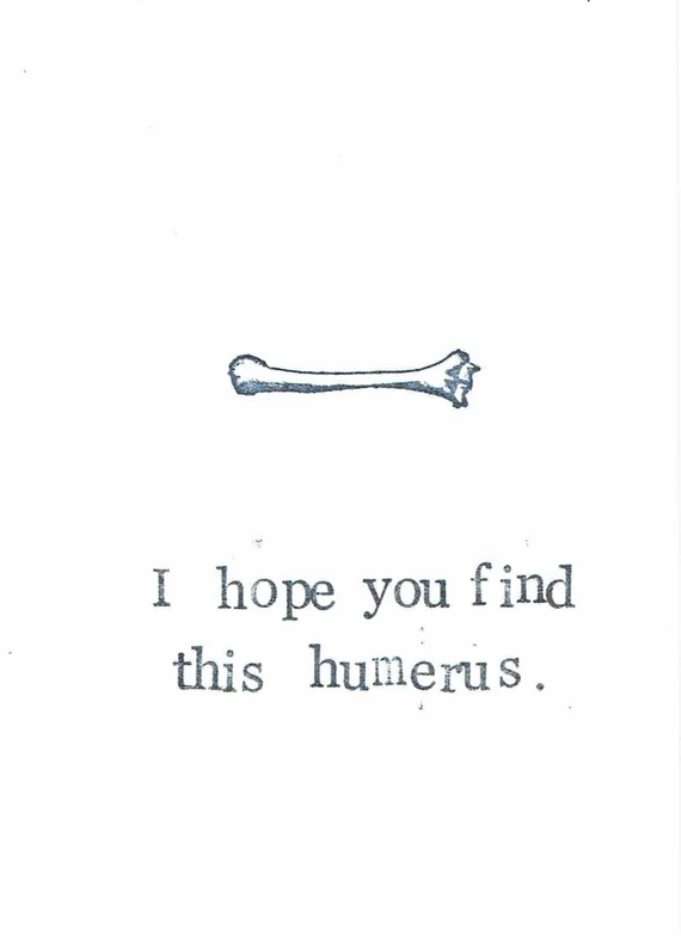
A lot of jokes rely on wordplay. Puns warp either the meaning of a word, take a homonym, or even create a metaphor. Puns are multifaceted and can warp any sense of meaning. So do many jokes.
That, of course, naturally requires that all involved parties have the same sense of meaning.
What’s the difference between a parkway and a driveway? (George Carlin)
This famous setup relies on knowing that pragmatically, the readers semantic usages of parkway and driveway are the same as their own. That these words are globally defined. Otherwise, the punchline:
“You drive on a parkway and park on a driveway”, falls flat.
Lets try another one.
“He’s got my father’s eyes”,
“Gomez take those things out of his mouth”.
Semantically, you know what the first line means. The script warps the semantic expectations. twists that perception, taking you out of the comfort of one pragmatic zone and straight into another one- without breaking the narrative.
It’s that storyline that holds the joke together. Without the red threat of a narrative plot carrying you from the setup to the punchline, jokes become meaningless.
The Punchline
Setup –> punchline, simple right.
Okay so, we already know that if your setup is bad, your punchline is going to fall flat. But, your punchline is also going to fall flat if it’s just, you know, a bad punchline. And what about narrative storytelling mentioned above. What if your punchline falls outside of the defined narrative?
Well your joke doesn’t work.
Treating jokes like narrative storytelling means that jokes must follow the rules of narrative storytelling. Punchlines maintain consistency and congruity. You can’t suddenly change the plot, add new characters, or change the location of the joke for the punchline if you want the reader to continue being part of the story. Jokes are narratively complete.
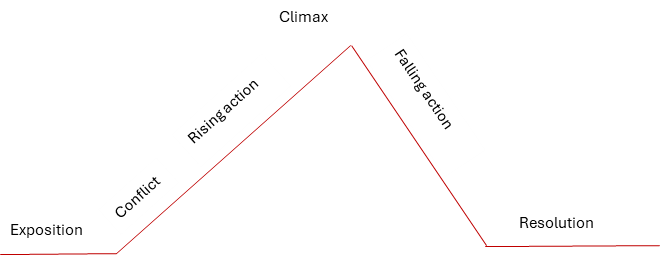
So the punchline does the work of turning narrative storytelling into a joke. The caveat being that it must fit into the narrative.
What makes a good punchline?
Well that depends on the preferences of the hearer. Good is subjective, there is no objective right way to punchline.
Flash back to the time my sister bought a book of jokes at a secondhand shop and in an effort to impress me, memorized most of them on her 15-hour plane flight to see me. Never mind that the book was about fornicating sheep and the expression of wtf on my face as my sister began spouting joke after joke where the punchline was an act of bestiality. Funny is subjective. It’s not enough to warp expectations. They also have to land right.
People achieve that using a variety of linguistic and psychological tactics. Some of them are even interesting.
However, one significant tactic is used in almost all jokes. The punchline subverts, it warps, it doesn’t follow the “normal expected outcome” from the setup. If it did, there wouldn’t be anything funny about it.
Jokes, from puns to knock knock jokes, very significantly rely on the same technique. Build a semantic script, a setting, and then then warp it. That can be by producing an unexpected result, by absurdism in which the punchline is typically random, or by using the expected in an unexpected way.
Punchline = introduce incongruity –> resolve incongruity
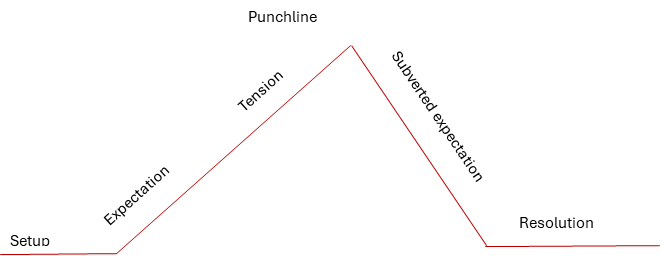
The resolution is the point where people figure it out and laugh.
Most importantly, because a lot of the mental processing required to make that processing happen is done under the hood, people laugh involuntarily, often before mentally figuring out the joke themselves.
Garden Pathing
Of course, even that can have some pretty interesting linguistics behind it.
Garden pathing, stemming from the phrase “to be led up the garden path”, to be deceived, refers to the psycholinguistic study of sentences that cannot be parsed correctly until finished. They rely on perverting pragmatics by establishing a narrative through shared semantic understanding and then warping it.
Time flies like an arrow, fruit flies like a banana.
The old man, the boat.
I know you’re thinking so what, it’s like if M.C. Escher dedicated himself to making sentences instead of art, but jokes are full of this kind of deception.
Still, even garden pathing follows the “setup–> punchline” format.
First you create a narrative and then you warp it in some way.
Riffing
But okay, telling jokes solo is boring, it’s simple, it’s predictable. What happens when people tell jokes together. Whether as a not-to-be-outdone keeping up with the Joneses or an I want to fit in/I can tell jokes too, humans like telling jokes as a form of reciprocating to other people telling jokes.
How do we do that?
Riffing is the concept of preserving the narrative of the original joke or pun and carrying it further.
“Time flies like an arrow, fruit flies like a banana”
“My house flies just like anything that sort of exists, not that picky, you know”
Take the narrative and carry it further.
Riffing can also be carried out by repetition. This is how memes are made.
If you like it then you better put a ring on it
If you like it then you better put an <insert current object being handled> on it
Ad infinitum
So what makes a joke? The ability to create a narrative that fits into your listener’s worldview as something they can understand and picture, and then deliver a punchline as part of that narrative. It’s narrative storytelling. And that’s also true when you follow up someone else’s joke with one of your own. Joining the story makes you part of the picture, part of the social experience.
So, do all of these rules and tactics actually have to apply? Well. No. Unfortunately, as my childhood school years taught me, a joke can also be shouting “Banana” at the right moment to disrupt a classroom. Humor is a low bar.